Buy kammer.eu ?
We are moving the project
kammer.eu .
Are you interested in purchasing the domain
kammer.eu ?
domain@kv-gmbh.de · 0541-91531010
Buy kammer.eu ?
How are Latin subjunctive subordinate clauses still translated with the subjunctive?
Latin subjunctive subordinate clauses are still translated with the subjunctive in English to convey the same sense of uncertainty, possibility, or doubt. In English, the subjunctive mood is used to express hypothetical or unreal situations, wishes, recommendations, or demands. Therefore, when translating Latin subjunctive subordinate clauses, the English subjunctive is used to maintain the same mood and meaning of the original Latin sentence. **
Maybe subjunctive or indicative?
The choice between subjunctive or indicative depends on the context of the sentence. The subjunctive mood is used to express doubt, uncertainty, desire, or hypothetical situations, while the indicative mood is used for statements of fact or certainty. To determine whether to use subjunctive or indicative, consider the verb's relationship to reality and whether it is expressing a fact or a possibility. **

Similar search terms for Subjunctive
Top-Angebote
Products related to Subjunctive:
-
Tools, Home & Hobby 11 X 11 Plastic Pegboard Wall Organizer Kit With Accessories For Tool Storage And Home Organization 11 X 11 Plastic Pegboard Wall Organizer Kit With Accessories For Tool Storage And Home OrganizationTransform cluttered spaces into organized areas with a smart storage solution designed to keep essentials within easy reach. This versatile pegboard wall organizer features four modular panels that help create customized storage for garages,...69,97 $*Shipping: 0,00 $Secure redirect to the provider
-
Uplifted Finds Cute Two Layer Hair Accessories Storage Box For Kids Desk And Jewelry Organization pinkKeep your childs favorite hair clips, rings, and small treasures neatly organized with this cute two layer storage box. Designed with clear drawers for easy visibility, it helps children quickly find their accessories while keeping their dressing...35,97 $*Shipping: 0,00 $Secure redirect to the provider
-
NO 10-Tier Shoe Rack-Tiered Storage for Sneakers, Heels, Flats, Accessories, and More-Space Saving OrganizationInstruction: 10-Tier Shoe Rack is made of 13mm diameter and powder-coated metal tubes and high-quality plastic connectors, which enables this shoe rack won’t wobble or topple, even when fully loaded with 72 pairs of shoes, and the powder-coated finish…56,09 $*Shipping: 0,00 $Secure redirect to the provider
-
Combo Retail Shop Standing Office Pegboard Storage, No Drill, Clip On Desktop Rack With Numerous DIY Accessories For Office Organization storage Box cTransform your workspace with the Standing Office Pegboard Storage, designed to enhance your organization and efficiency without the hassle of drilling. This nodrill, clipon desktop rack is the ultimate solution for decluttering your office while...99,97 $*Shipping: 0,00 $Secure redirect to the provider




-
Perhaps, subjunctive or indicative?
The choice between subjunctive or indicative depends on the context of the sentence. The subjunctive mood is used to express hypothetical or uncertain situations, wishes, recommendations, or doubts. On the other hand, the indicative mood is used for statements of fact or certainty. Therefore, if the sentence is expressing a possibility, doubt, or desire, the subjunctive mood would be more appropriate. **
-
Conditional, subjunctive or indicative?
The choice between conditional, subjunctive, or indicative mood depends on the context of the sentence. The conditional mood is used to express a hypothetical situation or a condition that is dependent on something else happening. The subjunctive mood is used to express wishes, recommendations, or possibilities. The indicative mood is used to state facts or ask questions. **
-
What is the use of the present subjunctive and the past subjunctive?
The present subjunctive is used to express desires, doubts, wishes, or hypothetical situations in the present or future. It is often used after certain verbs and conjunctions that indicate uncertainty or subjectivity. The past subjunctive, on the other hand, is used to express desires, doubts, wishes, or hypothetical situations in the past. It is often used in the same way as the present subjunctive, but in reference to past events or situations. Both subjunctive forms are used to convey uncertainty or subjectivity in a sentence. **
-
Are the subjunctive I and the subjunctive II present in all tenses?
No, the subjunctive I and subjunctive II are not present in all tenses. The subjunctive I is only present in the present tense, while the subjunctive II is present in the past tense. The subjunctive I is used to express wishes, suggestions, or hypothetical situations in the present, while the subjunctive II is used to express wishes, suggestions, or hypothetical situations in the past. Each tense has its own specific form of the subjunctive mood. **

'It is strange that + subjunctive'
It is strange that she should be so calm in such a chaotic situation. **
Would we use the subjunctive?
We would use the subjunctive mood in English to express wishes, hypothetical situations, recommendations, or demands. It is used to convey uncertainty, doubt, or desire. The subjunctive is typically used after certain verbs, expressions, or conjunctions that indicate these types of situations. **
Top-Angebote
Products related to Subjunctive:
-
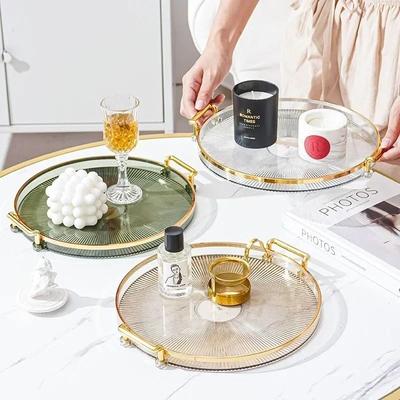
Uplift Picks Round Acrylic Storage Tray For Coffee Table Decor And Aromatherapy Organization Round Acrylic Storage Tray For Coffee Table Decor And Aromatherapy OrganizationA wellstyled space starts with thoughtful details. This round acrylic storage tray brings clean elegance and everyday functionality to your living room, bedroom, or vanity. Designed to neatly hold tea cups, candles, perfumes, or small decor pieces,...60,98 $*Shipping: 0,00 $Secure redirect to the provider
-
Friendly Fresh Finds Universal Car Seat Organizer Net Elastic Mesh Storage Bag For Auto Accessories & Small Item Organization Universal Car Seat Organizer Net Elastic Mesh Storage Bag For Auto Accessories & Small Item OrganizationKeep your car organized with the Universal Car Seat Storage Net. This elastic mesh organizer bag is the perfect solution for stashing small items between your car seats. Designed for drivers who value convenience, it offers a simple yet effective...37,97 $*Shipping: 0,00 $Secure redirect to the provider
-
Tools, Home & Hobby 11 X 11 Plastic Pegboard Wall Organizer Kit With Accessories For Tool Storage And Home Organization 11 X 11 Plastic Pegboard Wall Organizer Kit With Accessories For Tool Storage And Home OrganizationTransform cluttered spaces into organized areas with a smart storage solution designed to keep essentials within easy reach. This versatile pegboard wall organizer features four modular panels that help create customized storage for garages,...69,97 $*Shipping: 0,00 $Secure redirect to the provider
-
Uplifted Finds Cute Two Layer Hair Accessories Storage Box For Kids Desk And Jewelry Organization pinkKeep your childs favorite hair clips, rings, and small treasures neatly organized with this cute two layer storage box. Designed with clear drawers for easy visibility, it helps children quickly find their accessories while keeping their dressing...35,97 $*Shipping: 0,00 $Secure redirect to the provider
-
How are Latin subjunctive subordinate clauses still translated with the subjunctive?
Latin subjunctive subordinate clauses are still translated with the subjunctive in English to convey the same sense of uncertainty, possibility, or doubt. In English, the subjunctive mood is used to express hypothetical or unreal situations, wishes, recommendations, or demands. Therefore, when translating Latin subjunctive subordinate clauses, the English subjunctive is used to maintain the same mood and meaning of the original Latin sentence. **
-
Maybe subjunctive or indicative?
The choice between subjunctive or indicative depends on the context of the sentence. The subjunctive mood is used to express doubt, uncertainty, desire, or hypothetical situations, while the indicative mood is used for statements of fact or certainty. To determine whether to use subjunctive or indicative, consider the verb's relationship to reality and whether it is expressing a fact or a possibility. **
-
Perhaps, subjunctive or indicative?
The choice between subjunctive or indicative depends on the context of the sentence. The subjunctive mood is used to express hypothetical or uncertain situations, wishes, recommendations, or doubts. On the other hand, the indicative mood is used for statements of fact or certainty. Therefore, if the sentence is expressing a possibility, doubt, or desire, the subjunctive mood would be more appropriate. **
-
Conditional, subjunctive or indicative?
The choice between conditional, subjunctive, or indicative mood depends on the context of the sentence. The conditional mood is used to express a hypothetical situation or a condition that is dependent on something else happening. The subjunctive mood is used to express wishes, recommendations, or possibilities. The indicative mood is used to state facts or ask questions. **
Similar search terms for Subjunctive
-
NO 10-Tier Shoe Rack-Tiered Storage for Sneakers, Heels, Flats, Accessories, and More-Space Saving OrganizationInstruction: 10-Tier Shoe Rack is made of 13mm diameter and powder-coated metal tubes and high-quality plastic connectors, which enables this shoe rack won’t wobble or topple, even when fully loaded with 72 pairs of shoes, and the powder-coated finish…56,09 $*Shipping: 0,00 $Secure redirect to the provider
-
Combo Retail Shop Standing Office Pegboard Storage, No Drill, Clip On Desktop Rack With Numerous DIY Accessories For Office Organization storage Box cTransform your workspace with the Standing Office Pegboard Storage, designed to enhance your organization and efficiency without the hassle of drilling. This nodrill, clipon desktop rack is the ultimate solution for decluttering your office while...99,97 $*Shipping: 0,00 $Secure redirect to the provider
-
Jla Home/Furniture & Decor Caymus Storage Bench Gray , GrayThe Caymus Storage Bench offers a chic simplicity designed by Martha Stewart. With natural-finished wood legs, the bench features a wide upholstered design in light gray woven polyester with piped accents. The 3.25 thick, foam-filled cushion also...299,99 $*Shipping: 0,00 $Secure redirect to the provider
-
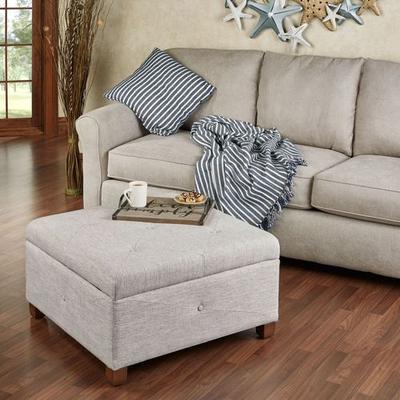
Jla Home/Furniture & Decor Caroline Storage Ottoman Tan , TanThe versatile Caroline Tan Storage Ottoman offers good looks, utility, and function. This wooden ottoman is beautifully covered in a tufted, heathered tan polyester fabric and is perfect in your living space. The cushioned top is great for sitting...285,00 $*Shipping: 0,00 $Secure redirect to the provider
-
What is the use of the present subjunctive and the past subjunctive?
The present subjunctive is used to express desires, doubts, wishes, or hypothetical situations in the present or future. It is often used after certain verbs and conjunctions that indicate uncertainty or subjectivity. The past subjunctive, on the other hand, is used to express desires, doubts, wishes, or hypothetical situations in the past. It is often used in the same way as the present subjunctive, but in reference to past events or situations. Both subjunctive forms are used to convey uncertainty or subjectivity in a sentence. **
-
Are the subjunctive I and the subjunctive II present in all tenses?
No, the subjunctive I and subjunctive II are not present in all tenses. The subjunctive I is only present in the present tense, while the subjunctive II is present in the past tense. The subjunctive I is used to express wishes, suggestions, or hypothetical situations in the present, while the subjunctive II is used to express wishes, suggestions, or hypothetical situations in the past. Each tense has its own specific form of the subjunctive mood. **
-
'It is strange that + subjunctive'
It is strange that she should be so calm in such a chaotic situation. **
-
Would we use the subjunctive?
We would use the subjunctive mood in English to express wishes, hypothetical situations, recommendations, or demands. It is used to convey uncertainty, doubt, or desire. The subjunctive is typically used after certain verbs, expressions, or conjunctions that indicate these types of situations. **
* All prices are inclusive of VAT and, if applicable, plus shipping costs. The offer information is based on the details provided by the respective shop and is updated through automated processes. Real-time updates do not occur, so deviations can occur in individual cases. ** Note: Parts of this content were created by AI.